
Product Catalog
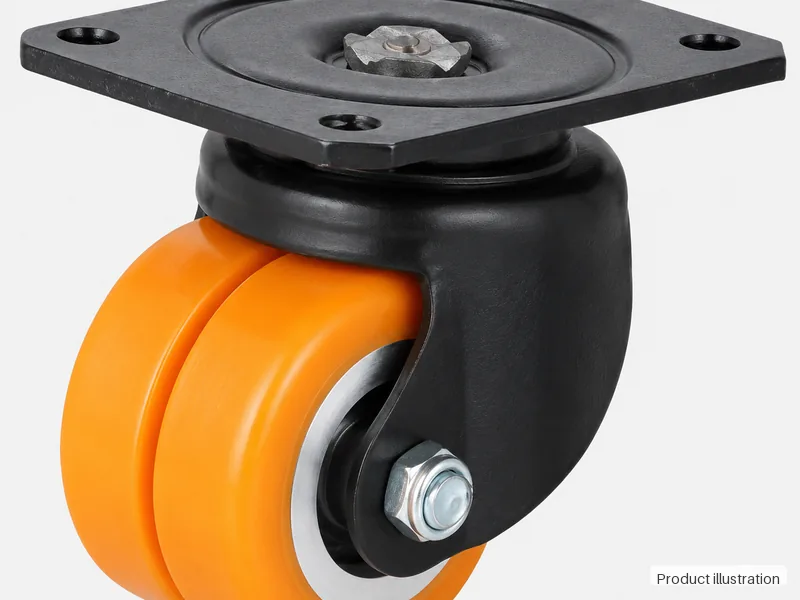
AGV / AMR Caster Wheels — Batch-Documented PU Wheels for Automated Vehicles
Updated 2026-11
On a manually pushed cart, a mediocre caster is an annoyance; on an AGV or AMR it is a fault code. Automated vehicles navigate by dead reckoning, odometry and vision, so every inconsistency in the trailing casters — a soft spot in one tread, a diameter that differs from its setmates, a swivel that stutters — shows up as tracking error, missed docking or wheel-slip faults. That is why our AGV/AMR line is specified the way it is: AGV-grade PU wheels on iron or aluminium cores, rated to 8 km/h with precision bearings, and supplied as matched sets with hardness, diameter and roundness documented per batch.
The matched-set discipline is the product. A batch certificate says the wheels on one vehicle actually match each other — same measured diameter, same durometer, same roundness — so the vehicle's height stays level, its odometry stays honest, and no single caster carries a hidden share of the load. Maintenance teams then get a wear-check rhythm they can plan around instead of reactive fault-chasing; our AGV maintenance guide lays out the wear checks and intervals that keep uptime predictable.
Specifications
| Wheel material | AGV-grade PU on iron core · AGV-grade PU on aluminium core |
|---|---|
| Quality documentation | Matched sets — hardness, diameter and roundness documented per batch (owner process statement) |
| Speed rating | ≤ 8 km/h (precision bearing series) |
| Size range | Ø 25–300 mm |
| Typical duty | AGV/AMR trailing casters, automated tuggers, mobile robot platforms |
| Published AGV classes (industry reference) | AGV ergonomic class up to 1,600 lb with ultra-low startup forces; engineered ergo line to 1,200 lb; a published 4 × 2 in twin-wheel AGV SKU rates 800 lb per unit — peer figures for context, never tenant ratings |
| Lead time | 15–20 days (custom configurations 30–40 days) |
| MOQ | 200 pieces (standard catalog items ship in smaller quantities) |
| Warranty | 18 months |
AGV caster capacity is specified per vehicle program — it depends on wheel size, floor, speed and how many casters share the load under the vehicle's own weight distribution — and is confirmed at quotation together with the batch documentation scope. Industry references place AGV caster duties anywhere up to the 1,600 lb ergonomic class and beyond in engineered configurations; published peer figures are context, not our ratings.
Applications & Selection
Why AGV casters are a different product
Three requirements separate an AGV caster from a lookalike catalog part. First, consistency: the vehicle leans on its casters being identical — a diameter mismatch of fractions of a millimeter across a set tilts the platform and shifts load onto the drive wheels, which is where traction and odometry live. This is why matched sets with per-batch documentation exist as a product category, and why "AGV-grade" means tolerances and certificates rather than a marketing adjective.
Second, rolling efficiency: every watt an AMR spends deforming a soft tread or dragging a misaligned swivel is battery runtime lost, and industry AGV-caster engineering is explicit that low rolling resistance and true tracking extend range and reduce faults. Hard, precise PU on a metal core, precision bearings and a consistently smooth swivel are the mechanical answer — the same tread family as our polyurethane wheels, manufactured and selected to tighter process control.
Third, wear behavior you can schedule around: a caster that fails suddenly takes a vehicle out of the fleet mid-shift, while one that wears predictably gets swapped at the planned maintenance window. That is the intent behind the batch documentation and the published wear-check intervals — maintenance reads the wear trend per position and replaces by plan. The maintenance guide linked below lays out the wear checks and the intervals behind that rhythm.
Selection points to settle before you RFQ
Start with the vehicle program, not the wheel: platform weight, caster positions and load distribution, drive-wheel layout (which decides how much load the trailing casters actually see), travel speed, floor material and joint condition, and duty cycles per shift. AGV capacity is a per-vehicle engineering number, and quoting it properly needs these inputs — per-wheel ratings copied from a catalog are how hidden overload happens.
State the documentation and consistency expectations explicitly: matched-set scope (per vehicle? per batch?), the measured properties you want on the certificate (diameter, durometer, roundness as our line documents them), and any fleet-wide interchangeability requirement so replacement sets drop in without re-leveling the platform.
Name the environment and interface: floor debris (a hard PU tread rides grit; a soft one embeds it), washdown or ESD requirements if any, mounting (top plate, stem or custom bracket), swivel/rigid mix and whether the vehicle needs a specific offset or trail for tracking. Where the AGV tows loads or runs fast duty cycles, derating is part of the quote, not an afterthought.
Frequently Asked Questions
What makes an AGV caster wheel different from a standard polyurethane caster?
Process control and documentation, more than material. An AGV-grade wheel is the same PU-on-metal-core family, but manufactured to tighter diameter and roundness consistency, supplied in matched sets whose hardness, diameter and roundness are measured and documented per batch, and rated for the 8 km/h precision-bearing speed class automated vehicles actually run. The point is fleet behavior: level platforms, honest odometry, predictable wear — things a generic catalog caster cannot promise because nobody measured it that way.
How do I size AGV/AMR casters for my vehicle?
From the vehicle, not the catalog. Distribute the platform's loaded weight across its caster positions per the actual geometry (trailing casters rarely share load equally, especially around the drive wheel), apply the duty margin for speed, floor joints and cycle count, and size the wheel for floor-friendly contact at that load. The rating for your program — including the matched-set documentation scope — is confirmed at quotation; industry references show AGV caster duties ranging up to and beyond the 1,600 lb ergonomic class, which is why per-program sizing matters.
What should my AGV caster RFQ include?
Vehicle platform weight and geometry, caster positions and load distribution, speed, floor type and condition, duty cycles, matched-set and batch-certificate expectations (which measured properties, per vehicle or per batch), environment (debris, moisture, ESD), mounting interface, swivel/rigid layout, and quantity per program. A drawing of the platform's underside shortens quoting the most.
Ordering & Documentation
Documents
Every order ships with a packing list and commercial invoice. AGV orders additionally quote with the batch documentation scope: the measured properties (hardness, diameter, roundness) recorded for the supplied matched sets. On request we provide wheel dimension sheets and mounting drawings so your vehicle integration can be checked before production.
Quotation
A quotation needs: the vehicle program data (weight, geometry, speed, floor, cycles), matched-set and documentation expectations, mounting and configuration, and quantity. The confirmed quotation states the capacity and documentation scope for your program — AGV capacity is a per-vehicle engineering figure, not a catalog number.
Sample & supply
Standard sizes are produced to order with an MOQ of 200 pieces; smaller trial quantities of catalog items can ship in some sizes — ask with your RFQ. Lead time is 15–20 days for standard configurations and 30–40 days for custom cores, mounting or documentation work. Samples ship freight collect and are refundable against a bulk order.
Storage & shipping
AGV wheels ship in set-preserving packaging: matched sets are kept together and identified, and treads are protected from denting and ozone (UV, sunlight, motor rooms) in storage. Store flat at stable indoor temperature; a wheel that takes a set in storage is exactly the inconsistency the batch documentation exists to prevent. Keep bearing bores packaged until installation.