
Product Catalog
High Temperature Casters (RM-Hot) — Wheel Materials, Real Temperature Ceilings and the Bearing Limit
Updated 2026-11
A caster in an oven aisle fails in a predictable order: the tread softens or de-bonds, the grease loses viscosity, then the bearing seizes. That failure order is the selection logic. The wheel materials that survive — heat-resistant polyamide, hi-temp phenolic, cast iron, forged steel — are paired in the RM-Hot series with special high-temperature greases and clearance-tolerant fitments, because repeated thermal cycling, not just peak temperature, is what kills ordinary casters.
Published manufacturer data anchors the class: heat-resistant polyamide SKUs rated 120-140 kg at 3, 4 and 5 inch diameters with double ball bearings; a hi-temp phenolic wheel class charted at -65 to +475 °F. The materials ladder extends above them — liquid-crystal polymer to 260 °C continuous and PEEK to a 343 °C melting point — while basic heat-resistant rubbers top out near 200-300 °C. Your per-configuration rating, including the bearing and grease package, is confirmed at quotation.
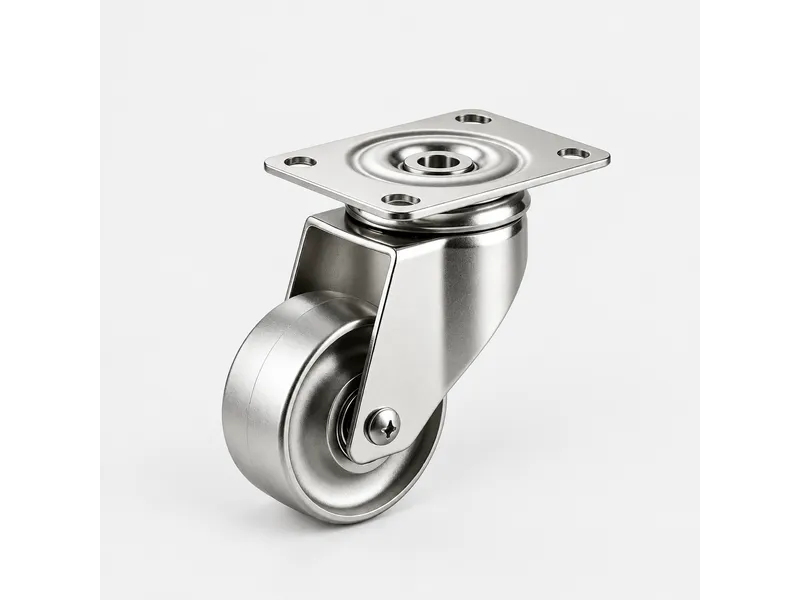
Specifications
| Series concept (RM-Hot) | Heat-resistant wheel materials (high-temp nylon, phenolic, cast iron, forged steel) with special greases and clearance-tolerant fitments for repeated thermal cycling |
|---|---|
| Polyamide SKU band (manufacturer reference) | Heat-resistant polyamide wheels, 3/4/5 in × 32 mm, double ball bearing, 120-140 kg (per-size chart rows: Ø75 → 120 kg, Ø100 → 140 kg, Ø125 → 140 kg), rigid or plate-swivel — per-SKU table, never a family rating |
| Hi-temp phenolic (manufacturer chart reference) | TR-class hi-temp phenolic wheels, -65 to +475 °F service band |
| Polymer ladder (industry reference) | LCP seals/bushings to 260 °C continuous; PEEK cores/cages to 343 °C melting point; basic heat-resistant rubbers top out ~200-300 °C |
| Honest boundary (industry reference) | Standard lubricants lose viscosity quickly at high temperature — grease selection and bearing fit, not just wheel material, decide real service temperature |
| Typical duty | Bakery racks and oven trolleys, industrial furnaces, heat-treatment and paint-line fixtures |
| Lead time | 15–20 days (custom configurations 30–40 days) |
| MOQ | 200 pieces (standard catalog items ship in smaller quantities) |
| Warranty | 18 months |
SKU bands and chart rows are published manufacturer references kept per-line; the polymer figures are material-class references. None of them is a tenant family rating — the rating for your wheel material, bearing and grease package at your cycle temperature is stated on the quotation.
Applications & Selection
Why the material ladder decides — and where it actually breaks
The published material classes map cleanly to duty. Heat-resistant polyamide handles bakery-rack and oven-trolley temperatures with the option of double ball bearings for easy rolling under repeated loading. Hi-temp phenolic extends the range further and keeps the class non-marking, which food-safety guidance asks of bakery wheels. Above the polymer range, cast iron and forged steel wheels carry the load while the bearings and grease become the limiting components — published material guidance is blunt that basic rubbers soften and fail in the 200-300 °C range, and that standard lubricants lose viscosity quickly, increasing wear long before the wheel itself fails.
That is why the RM-Hot concept greases and fits for temperature: special high-temperature grease keeps the bearing lubricated at soak, and clearance-tolerant fitments absorb the differential expansion between a hot wheel and a cooler bracket. A caster specified only by wheel material is half-specified — published failure descriptions name bearing expansion, seizure and lubricant breakdown as the classic high-temperature failures.
Our supply path is own production plus outsourcing: the RM-Hot material set is deliverable across plate and stem mounts. For advanced polymers (PEEK, LCP) the honest boundary is cost — published industry analysis notes these materials raise unit cost sharply, which is why they are quoted per application rather than stocked as a family line.
Selection points to settle before you RFQ
State the thermal profile, not the peak: continuous soak temperature, cycle count per day, and cool-down time between cycles. Published material classes separate continuous ratings from melting points for exactly this reason — a 260 °C continuous polymer and a 343 °C melting point are different claims about different components.
Name the bearing and grease expectation. In high-temperature service the bearing is usually the first component to limit the build; asking for the grease class and fitment clearance up front is what separates an oven-rated caster from an oven-colored one.
Flag wash-down and food contact if they apply — bakery duty often adds moisture and cleaning chemistry to the thermal load, and the material choice shifts accordingly (phenolic and stainless fittings change the answer).
Frequently Asked Questions
What temperature can caster wheels actually take?
It depends on the wheel material, and published classes keep the claims separate: basic heat-resistant rubbers handle roughly 200-300 °C; heat-resistant polyamide and hi-temp phenolic wheel classes chart up to about +475 °F (~245 °C) service; liquid-crystal polymer components run to 260 °C continuously and PEEK parts to a 343 °C melting point. In real service the bearing grease often fails before the wheel — so the honest answer includes the lubricant package, and the quotation states it.
Why did my oven rack casters seize even though the wheels looked fine?
The grease, not the wheel. Published failure descriptions for hot-duty casters name lubricant viscosity loss, bearing expansion and seizure as the standard failure chain — the wheel survives while the bearing stops turning. High-temperature casters are specified with special grease and clearance-tolerant fitments for exactly this; replacing standard casters with temperature-rated bearings and grease is the fix.
What should my high-temperature caster RFQ include?
The thermal profile (continuous soak temperature, cycle frequency, cool-down), load per caster, wheel material preference, bearing and grease requirements, mount style, any wash-down or food-contact requirement, and quantity. Photos of the failing casters and their failure mode (de-bonded tread vs seized bearing) shorten quoting the most.
Ordering & Documentation
Documents
Every order ships with a packing list and commercial invoice. The wheel material, bearing type and grease class for the batch are stated on the quotation; dimensional drawings (plate, bolt pattern, wheel cross-section) are available on request for rack and oven builders.
Quotation
A quotation needs: thermal profile (soak temperature, cycles), load per caster, wheel material, bearing and grease specification, mount interface, and quantity. The confirmed quotation states the temperature rating for your configuration — published material classes are references, the quotation is the commitment.
Sample & supply
Standard builds are produced to order with an MOQ of 200 pieces; smaller trial quantities of catalog items can ship in some sizes — ask with your RFQ. Lead time is 15-20 days standard, 30-40 days for custom material or fitment work. The usual validation for hot duty is a sample set through a full production cycle in the real oven aisle — watching the first seized bearing, not the first catalog page.
Storage & shipping
High-temperature casters ship with their specified grease installed; store indoors away from direct sun. Before installation, confirm the wheels spin free and the grease is present at the bearing — a caster that sat through a cold winter ships fine but deserves the same two-minute check as any precision component.